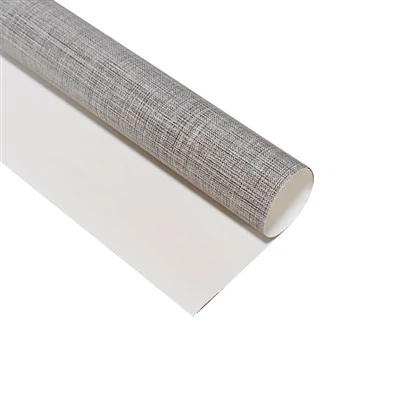
As a supplier of Engineered Veneer Long Strips, I often get asked whether these products are resistant to scratches. This is a crucial question for many customers, especially those who are looking for durable and long - lasting materials for their interior design projects. In this blog, I will delve into the scratch - resistance of Engineered Veneer Long Strips based on scientific knowledge and practical experience.
Understanding Engineered Veneer Long Strips
Engineered Veneer Long Strips are a type of decorative material that combines the beauty of natural wood with the durability and stability of engineered products. They are made by slicing thin layers of natural wood and bonding them to a high - quality substrate. This process not only enhances the aesthetic appeal but also provides better dimensional stability compared to solid wood.
The Engineered Veneer Long Strips we offer come in various wood species, colors, and patterns, allowing customers to choose the one that best suits their design needs. Whether it's for residential or commercial applications, these long strips can add a touch of elegance to any space.


Factors Affecting Scratch Resistance
Wood Species
Different wood species have different levels of hardness, which directly affects their scratch resistance. Hardwoods such as oak, maple, and walnut are generally more scratch - resistant than softwoods like pine or cedar. The density of the wood plays a significant role here. Hardwoods have a higher density, which means they can withstand more pressure and abrasion without getting scratched.
For example, oak has a Janka hardness rating of around 1290 lbf (pounds - force). This rating indicates the amount of force required to embed a 0.444 - inch steel ball into the wood to half its diameter. A higher Janka rating means the wood is more resistant to scratches. When we select the wood for our Engineered Veneer Long Strips, we take into account the hardness of the wood species to ensure a certain level of scratch resistance.
Surface Treatment
The surface treatment of Engineered Veneer Long Strips also has a major impact on scratch resistance. A high - quality finish can act as a protective layer, preventing scratches from reaching the wood surface. There are several types of surface treatments available, such as lacquer, polyurethane, and oil finishes.
Lacquer finishes are known for their hard and durable surface. They form a tough film over the wood, providing excellent scratch resistance. Polyurethane finishes are also popular as they offer good protection against scratches, stains, and moisture. Oil finishes, on the other hand, penetrate the wood, enhancing its natural beauty while providing some degree of scratch resistance. At our company, we use advanced surface treatment techniques to ensure that our Engineered Veneer Long Strips have a high level of scratch resistance.
Substrate Quality
The substrate on which the veneer is bonded also affects the overall scratch resistance of the product. A high - quality substrate provides a stable base for the veneer, preventing it from warping or cracking under stress. This, in turn, helps to maintain the integrity of the veneer and reduces the likelihood of scratches.
We use high - density fiberboard (HDF) or plywood as substrates for our Engineered Veneer Long Strips. These materials are known for their strength and stability. The strong bond between the veneer and the substrate ensures that the veneer remains firmly in place, even when subjected to normal wear and tear.
Testing the Scratch Resistance
To ensure the quality of our Engineered Veneer Long Strips, we conduct various scratch - resistance tests. One common test is the Taber Abrasion Test. In this test, a sample of the veneer is placed on a rotating platform, and a weighted abrasive wheel is applied to the surface. The wheel rotates for a specified number of cycles, and the amount of wear and tear on the veneer is measured.
Another test is the Pencil Hardness Test. In this test, pencils of different hardness levels are used to scratch the veneer surface. The hardness of the pencil that does not leave a scratch on the veneer indicates the scratch resistance of the material.
Based on our test results, our Engineered Veneer Long Strips have shown excellent scratch - resistance properties. They can withstand normal daily use, such as furniture movement, foot traffic, and minor impacts, without showing significant scratches.
Applications and Scratch Resistance
Engineered Veneer Long Strips are widely used in various applications, including furniture, wall paneling, and flooring. In furniture applications, the scratch - resistance of the veneer is crucial as it is constantly exposed to contact with objects. Our veneer can withstand the normal wear and tear associated with furniture use, such as placing objects on the surface or moving chairs.
For wall paneling, scratch resistance is important to maintain the aesthetic appeal of the walls. Our Engineered Veneer Long Strips can resist scratches caused by accidental impacts, such as brushing against the wall with a hard object.
In flooring applications, the veneer needs to be able to withstand heavy foot traffic. Our Engineered Veneer Long Strips are designed to be durable enough to handle the stress of daily use, including the movement of furniture and the walking of people.
Comparing with Other Materials
When compared to other decorative materials, such as laminate or solid wood, Engineered Veneer Long Strips offer a good balance between aesthetics and scratch resistance. Laminate is known for its high scratch resistance, but it may lack the natural beauty of wood. Solid wood, on the other hand, has a unique charm but may be more prone to scratches and dents.
Our Engineered Veneer Long Strips combine the natural look of wood with the durability and scratch resistance of engineered materials. They are a cost - effective alternative to solid wood, offering similar aesthetic appeal without the high maintenance requirements.
Conclusion
In conclusion, Engineered Veneer Long Strips are generally resistant to scratches, thanks to factors such as the choice of wood species, surface treatment, and substrate quality. Our company takes great care in selecting the best materials and using advanced manufacturing techniques to ensure the highest level of scratch resistance.
If you are interested in our Engineered Veneer Long Strips, Engineered Veneer Large White Strips, or Engineered Veneer Sandwich Strips, we invite you to contact us for a detailed discussion. We are more than happy to provide you with samples and answer any questions you may have. Let's work together to bring your interior design projects to life with our high - quality engineered veneer products.
References
- "Wood Handbook: Wood as an Engineering Material." United States Department of Agriculture, Forest Service, Forest Products Laboratory.
- "The Properties of Wood and Wood - Based Materials." By J. Ross and S. R. G. Kelsey.