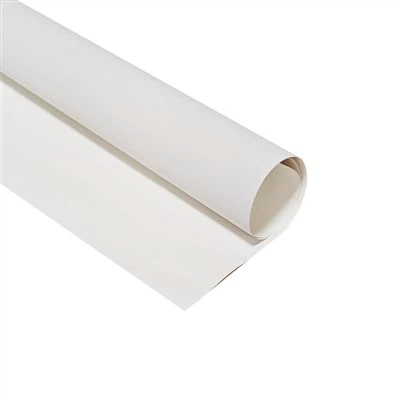
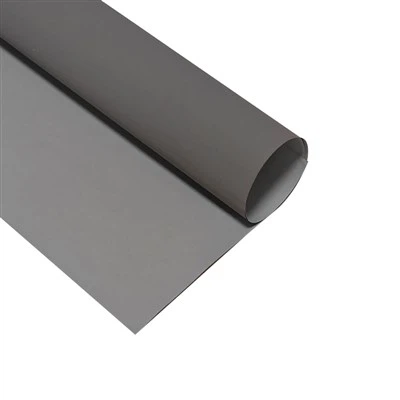
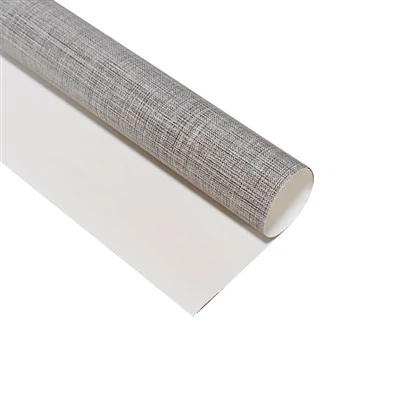
There are indeed many types of decorative paper. Let me help you organize the common classification methods to help you quickly find the type you need.
Classification by Material and Process
This is the most fundamental classification method, determining the basic properties and uses of decorative paper.
Printed Decorative Paper: Various patterns, colors, and textures are formed on a paper base through printing processes. It is the foundation for making decorative materials such as furniture and wallpaper.
Impregnated Paper: Especially melamine-impregnated paper, after being impregnated with melamine resin and dried, has extremely high wear resistance, heat resistance, stain resistance, and water resistance. It is the mainstream material for engineered wood veneers (such as furniture and flooring).
Decorative Overlay Paper: The surface undergoes special treatment, with various colors, textures, and patterns. It is used to cover furniture, flooring, and walls to provide a decorative effect. The material can be pulp paper, resin-impregnated paper, or polyester film, etc.
Backing Paper: One side is coated with adhesive (such as hot melt adhesive or pressure-sensitive adhesive) and used to bond decorative paper to the substrate (such as MDF board or wood), providing fixation and adhesion.
Classification by Use and Application:
Furniture Decorative Paper: Used for surface decoration of cabinets, tables, chairs, doors, etc., emphasizing aesthetics and easy cleaning, such as wood grain paper and solid color paper.
Flooring Decorative Paper: Used as the surface layer of laminate flooring, requiring extremely high abrasion resistance and dimensional stability.
Wallpaper Base/Decorative Paper: Serves as the surface layer or base material for wallpaper, providing patterns and textures.
Architectural Decorative Paper: Used for interior partitions, ceilings, etc.
Classification by Decorative Effect and Style:
Wood Grain Decorative Paper: Imitates various wood grains, the most popular choice for creating a natural and warm atmosphere.
Solid Color Decorative Paper: Offers a single, uniform color, simple and elegant, suitable for modern minimalist styles.
Stone-textured and leather-textured decorative papers: These imitate the textures and feel of natural materials such as marble and leather, used to create luxurious or special effects.
Special effect decorative papers: These offer effects such as metallic, pearlescent, frosted, and 3D embossed finishes to meet personalized design needs.
Classification by substrate and performance:
PVC decorative paper: Made with PVC film as the substrate, it has excellent waterproof and moisture-proof properties and is commonly used in humid environments such as kitchens and bathrooms.
PET decorative paper: Made with PET film as the substrate, it has a smooth surface, is heat-resistant, not easily deformed, and easy to clean, but the cost is relatively high.
Melamine-impregnated paper: As mentioned above, its excellent overall performance (wear-resistant, heat-resistant, and environmentally friendly) has made it the standard choice in the furniture industry.